

Picture this: you're settling in for a long-haul flight. You’re already fighting the familiar battles—the cabin that’s either freezing or stuffy, the awkward dance with a neck pillow, the desperate search for a moment of peace. The right zip-up jacket isn't just another piece of clothing in this scenario; it's a specialized travel tool engineered to solve these exact problems. It’s your secret weapon for comfort, storage, and effortless style, all in one.
Why a Zip-Up Jacket Is Your Most Valuable Travel Companion
Seasoned travelers know their carry-on isn't just a bag; it's a meticulously chosen kit of problem-solving gear. Noise-canceling headphones and a good book are non-negotiables, of course. But the humble zip-up jacket? It’s often seen as just an extra layer for warmth.
Thinking of it that way is like seeing a smartphone as just a way to make calls. You're completely missing its true potential.
A truly well-designed travel jacket is so much more than basic apparel—it becomes an indispensable partner on your journey. It’s your personal climate control, letting you adapt instantly to a frigid airplane cabin or a stuffy airport terminal with a simple pull of a zipper.
More Than Just a Layer
What really sets modern travel jackets apart is their multi-functional design. They don't just provide warmth; they offer real, practical solutions to the most common headaches of travel. Imagine a jacket with secure, smartly placed pockets that keep your passport and phone safe, so you're not frantically digging through your bag at the security line. Or a hood that’s perfectly shaped to block out light and sound, creating a private cocoon for you to actually get some rest.
This move toward versatile, purpose-built gear isn't just some niche trend. The global jacket industry was valued at a massive $94.5 billion in 2022, and North America alone made up over 30% of that market. This boom is being driven by travelers just like you who are demanding lightweight, packable, and multi-use options that make their trips easier.
A great travel jacket shouldn’t just keep you warm. It should make your journey easier, more comfortable, and less stressful by anticipating your needs before you even have them.
This guide is here to help you spot the features that make all the difference. We’ll break down what separates a basic hoodie from a true piece of engineered travel equipment. Once you know what to look for, you can find the best jacket for airplane travel that will completely change your experience from takeoff to landing.
Choosing the Right Fabric for Your Journey
The fabric of your zip up jacket is the single most important factor for comfort, especially when you're traveling. What feels great on your couch might become a liability on a 10-hour flight. Think of it less as just a piece of clothing and more as a crucial piece of travel gear.
Choosing the right material is about matching the tool to the job. You wouldn't wear a heavy wool coat on a tropical vacation, and similarly, you shouldn't rely on a simple cotton hoodie for a long-haul travel day. For travel, the priorities are very specific.
The Big Three Travel Fabric Qualities
When I'm looking at materials for a travel jacket, I always zero in on three key qualities. If a fabric doesn't have these, it’s a no-go for me.
- Breathability: Airplane cabins are notorious for their wild temperature swings and stuffy air. A breathable fabric is your best friend, letting excess heat and moisture escape so you don't feel clammy and gross.
- Stretch: Let's be honest, airline seats aren't getting any bigger. A jacket needs to move with you, not fight you. Materials with a good amount of stretch (usually from spandex or elastane) won't feel tight across your back or shoulders when you're trying to get comfortable.
- Wrinkle Resistance: There's nothing worse than arriving at your destination, pulling out your jacket, and finding it's a wrinkled mess. Look for fabrics that either don't wrinkle easily or release them quickly, so you can look sharp right out of your bag.
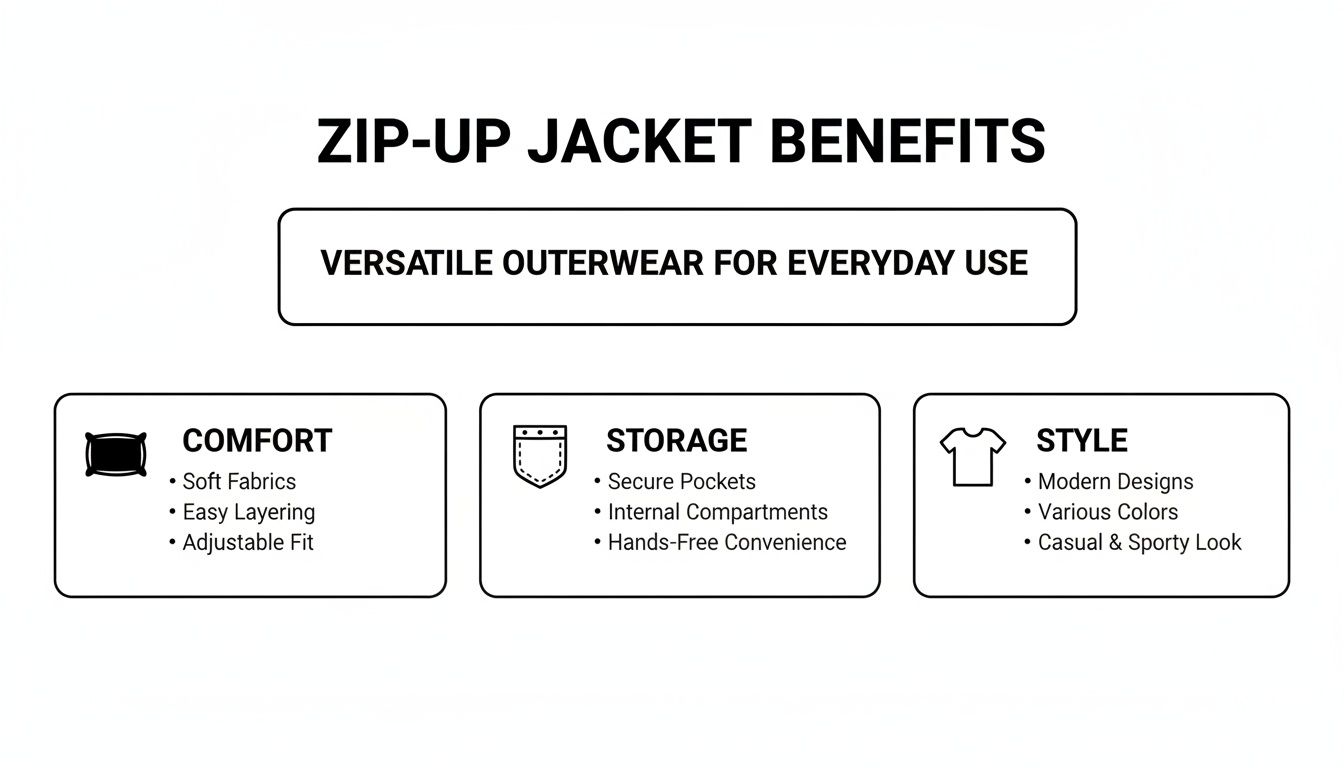
These core benefits—comfort, smart storage, and versatile style—are what elevate a jacket from a basic layer to an indispensable travel companion.
Common Fabrics and Why Blends Are Better
Natural fibers like cotton feel soft, but they're a poor choice for serious travel. They soak up moisture, take forever to dry, and wrinkle if you even look at them wrong. Fleece is warm, sure, but it's often bulky to pack and doesn't breathe well. This is exactly why technical blends have become the gold standard.
To make this easier, let's break down some common materials you'll encounter.
Travel Jacket Material Comparison
| Material | Best For | Breathability | Packability | Wrinkle Resistance |
|---|---|---|---|---|
| Polyester/Spandex Blend | All-around travel, long flights, active commutes | High | Excellent | High |
| Merino Wool | Temperature regulation, odor resistance | Excellent | Good | Good |
| Fleece (Polyester) | Cold climates, casual warmth | Low | Fair | High |
| Cotton | Lounging, very short trips | Low | Poor | Poor |
| Nylon | Durability, wind/water resistance | Moderate | Excellent | Moderate |
As you can see, different fabrics serve different purposes, but for the specific demands of travel, one combination really stands out.
A polyester-spandex blend is often the sweet spot. It gives you the durability, moisture-wicking, and wrinkle-resistant power of polyester, plus the incredible four-way stretch from spandex. It’s a workhorse combination that’s built for the realities of being on the move.
This shift toward high-performance, functional clothing isn't just a niche trend. The outdoor jackets market is expected to skyrocket to $60.23 billion by 2035, a clear sign that people are investing in gear that actually performs.
That's precisely why the STR-8 Jacket is made from a premium polyester-spandex blend. It wasn't a random choice; it was a deliberate engineering decision to nail those key travel needs: packability, breathability, and total freedom of movement. It's designed to keep you comfortable whether you're sprinting to a connecting flight or trying to catch some sleep at 30,000 feet.
Ultimately, the goal is a jacket that works for your journey, not one you have to work around. If you want more tips on dressing for a long trip, our guide on the best travel clothes for long flights has you covered.
Essential Features That Elevate Your Travel Experience
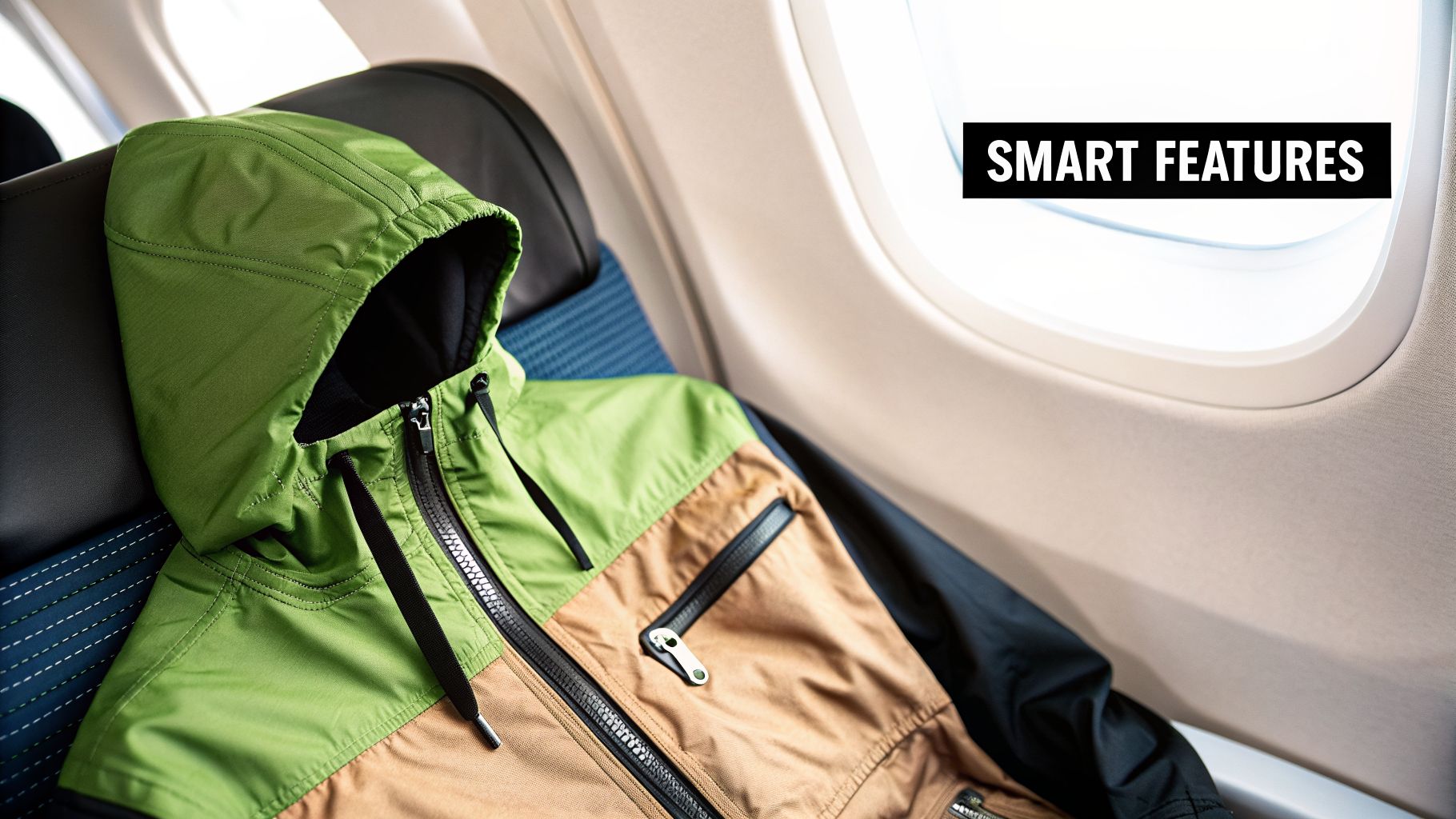
While the right material is the starting point for a great travel jacket, it's the features that really turn it from a simple layer into a piece of indispensable gear. The right details solve the little frustrations we all face on the road, making a good jacket a fantastic travel partner.
Think of these features as the built-in tools that make your journey smoother. The difference between basic zip up jackets and those truly designed for travel lies in these thoughtful additions. It’s about so much more than just staying warm; it’s about anticipating what you’ll need when you’re in transit.
The Non-Negotiable Travel Features
Before you even think about bells and whistles, a travel jacket has to nail a few core basics. These are the features that deliver security, comfort, and sheer convenience when you’re on the move.
- Secure Zippered Pockets: This is number one, without a doubt. Open pockets are just asking for trouble when you’re rushing through a crowded airport or trying to get some sleep on a plane. Secure, zippered compartments are non-negotiable for keeping your passport, phone, and wallet safe but still within easy reach.
- A Well-Designed Hood: A good hood is your personal bubble. It can block out the harsh cabin lights when you’re trying to sleep, offer a bit of privacy in a packed terminal, and give you that extra bit of warmth when the plane's AC is cranked up.
- Cozy Thumbholes: This might seem like a tiny detail, but anyone who’s had them knows they make a huge difference. Thumbholes keep your sleeves from riding up, add a welcome layer of warmth over your hands, and just create a snug, settled-in feeling that boosts your overall comfort.
These aren't just "nice-to-haves"; they're the absolute baseline for what makes a jacket truly worthy of your luggage space. They tackle the most common travel headaches, from security to personal comfort. You can see more on what makes a jacket perfect for flying in our guide to the best lightweight travel jackets.
Next-Generation Comfort and Ergonomics
Once the basics are covered, the next level of design focuses on a deeper problem: the physical strain of long-haul travel. Sitting in a cramped seat for hours puts a real toll on your neck, shoulders, and back. The most innovative jackets are now engineered to fight back against that fatigue.
A truly advanced travel jacket doesn't just provide passive comfort; it delivers active support. It becomes an ergonomic solution that helps reduce the physical toll of your journey.
This is where smart design moves beyond simple convenience and into the realm of travel wellness. Imagine a jacket with a built-in support system designed specifically to combat the aches of sitting. The STR-8 Jacket, for instance, incorporates a unique "kangaroo" pocket with an internal support membrane.
This system isn't just a hand-warmer. It’s engineered to gently cradle your arms, taking their weight off your shoulders and relieving the constant tension that builds in your neck. It’s like having a built-in travel pillow for your arms, giving you hands-free support whether you're reading a book, watching a movie, or just trying to rest. This is how a jacket evolves from a simple accessory into an active part of your comfort strategy, helping make your travel time feel restorative instead of draining.
Finding a Fit That Puts Seated Comfort First
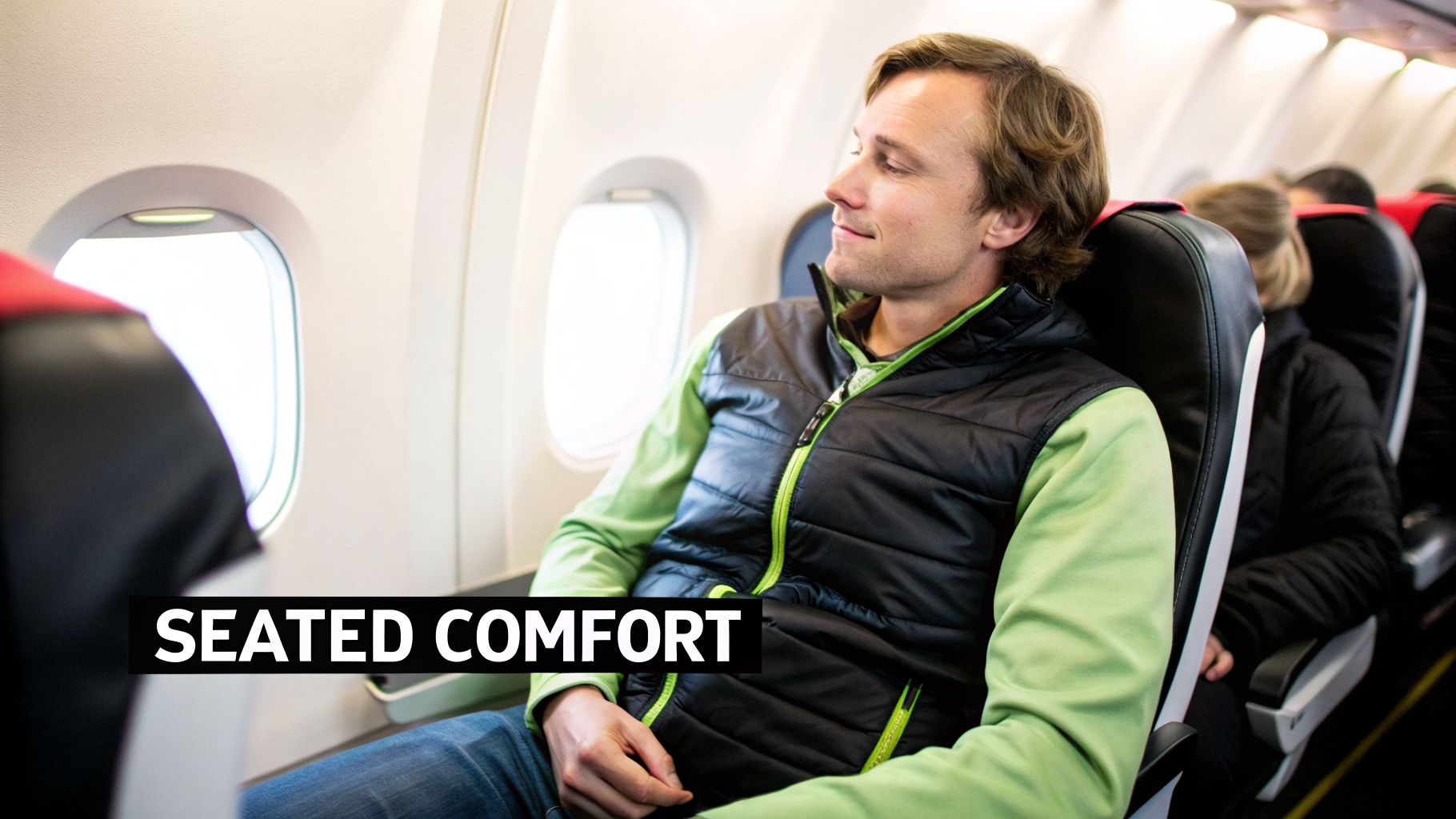
When you're shopping for a new jacket, what's the first thing you do? You stand up straight and check yourself out in the mirror. It's only natural. But for a travel jacket, that’s not the real test.
The true measure of a great travel jacket is how you feel three hours into a flight, wedged into a less-than-spacious seat. How it looks when you're standing is one thing; how it performs when you're sitting for hours on end is what really matters.
It's a delicate balance. A jacket that’s too snug will start to feel like a straightjacket, digging into your shoulders and pinching at your waist. Go too baggy, though, and you’ll be dealing with awkward lumps of fabric bunching up around your middle and under your arms—exactly where you want less bulk, not more.
The goal for a travel jacket isn't just "loose" or "tight"—it's adaptive. The fit should look sharp and tailored but feel like it was made to move with you, not against you.
This is why the fit of your zip up jacket is so important for travel. You’re searching for that Goldilocks zone: a fit that’s structured enough to look good but flexible enough to let you move, layer, and—most importantly—sit comfortably.
The Sweet Spot Between Structure and Flexibility
To nail this perfect fit, pay close attention to the shoulders and torso when you try a jacket on. Can you cross your arms comfortably? Can you reach for something in your bag without feeling a major pull across your back? Now, sit down. Does the fabric lay smoothly, or does it ride up and bunch awkwardly at the zipper?
This is where smart design and modern materials really shine. A fabric blend with a bit of stretch, like a polyester-spandex mix, can give you that clean, structured look while still flexing as you shift and settle in your seat. The jacket holds its shape, but it also adapts to your body.
Why Unisex Designs Are Taking Over Travel Wear
This laser focus on practical function and all-day comfort is driving a huge shift in the travel apparel world. In fact, the market for unisex jackets is set to jump from $48.3 billion in 2026 to $68.9 billion by 2034.
What's behind the trend? A lot of it comes from younger buyers—with 45% of Gen Z shoppers saying they actively look for gender-neutral options. They prioritize a fantastic, functional fit over outdated, rigid style rules. For us travelers, this is great news. It means more thoughtful, inclusive designs built for a wider range of people and real-world situations. You can discover more insights about the unisex jacket market on intelmarketresearch.com.
The STR-8 Jacket’s unisex cut is a perfect example of this philosophy in action. It was specifically engineered to flatter different body types while giving you the flexibility you need for those long-haul journeys. It’s a fit designed not for a quick glance in a mirror, but for the real demands of modern travel.
Smart Packing and Care for Your Go-To Jacket
Your travel jacket should be the most reliable, least fussy piece of gear in your bag. The whole point of a great zip up jacket is that it simplifies your life on the road, taking the abuse of travel without needing constant attention. You get to focus on the trip, not your clothes.
It all starts with how you pack. For those lightweight technical jackets, like ones made from polyester-spandex blends, the "ranger roll" is a game-changer. You just roll the jacket up into a tight, compact cylinder. This simple move not only frees up a surprising amount of space in your luggage but also helps keep it from getting hopelessly wrinkled.
Keeping Your Jacket Fresh On the Go
Let's be realistic—travel can be messy. You might spill coffee rushing to your gate or just feel a bit grimy after a marathon travel day. It happens. The good news is that modern technical fabrics are built for exactly these moments.
For most minor spills, all you need is a damp cloth and maybe a tiny bit of mild soap to dab the spot clean. Because these materials are designed to wick moisture, they also air-dry in a flash. No more sitting around with a giant wet spot on your sleeve for hours.
A great travel jacket shouldn’t be high-maintenance. It should be a resilient, self-sufficient piece of gear that lets you handle minor mishaps quickly and get back to your journey without missing a beat.
Proper care between trips is what really extends the life of your jacket. Always double-check the care tag, but most performance fabrics have the same basic needs.
- Machine Wash Cold: Stick to a gentle cycle and use a mild detergent. This protects the technical fibers and any special finishes on the fabric.
- Zip It Up: Before you toss it in the wash, make sure all the zippers and pockets are fully closed. This prevents the metal or plastic teeth from snagging the jacket's fabric or other items in the load.
- Tumble Dry Low or Hang Dry: High heat is the enemy of spandex and other elastic fibers. It can permanently damage the stretch. Your best bet is to either tumble dry on the lowest heat setting or simply hang it up to air dry.
Following this simple routine ensures your jacket stays in top shape, ready for whatever you throw at it on your next adventure. The goal is a dependable piece of gear that just works, making every trip a little smoother.
Your Top Travel Jacket Questions, Answered
Picking the right travel gear can feel overwhelming. You’ve got a million things to think about, and your jacket—something you'll practically live in—is a big one. Let's walk through the most common questions travelers ask about zip up jackets so you can find one that feels like it was made for you.
We'll get into the real-world details, from what works best on a long flight to whether that higher price tag is actually worth it.
What Is the Best Type of Zip Up Jacket for Long Flights?
For long flights, the perfect zip-up jacket is a master of balance. Think of it as your personal climate control system for the notoriously unpredictable airplane cabin. You’ll want a jacket that champions breathability, stretch, and effortless packability.
Look for modern technical fabrics, especially a good polyester-spandex blend. These materials are fantastic at keeping you comfortable, whether the cabin feels like a stuffy bus or an icebox. Plus, they offer the stretch you need to twist, turn, and get settled in a cramped seat without feeling tangled up.
A great flight jacket also needs to pack down small. It shouldn't be the reason you're fighting to close your carry-on. Beyond the fabric, make sure it has secure, zippered pockets—an absolute must for keeping your passport, phone, or earbuds safe while you doze off.
But to truly conquer in-flight comfort, you need a jacket that tackles the physical toll of sitting for hours. A standard jacket keeps you warm, but a truly innovative one like the STR-8 Jacket goes further. It’s built with an arm support system that’s designed to take the strain off your neck and shoulders, a problem most jackets don't even try to solve.
Are Expensive Technical Jackets Really Worth It for Travel?
For anyone who travels more than occasionally, the answer is a resounding yes. While the sticker shock on a high-quality technical jacket is real compared to a basic cotton hoodie, you’re paying for performance and durability that truly pays off on the road. These aren't just jackets; they're engineered for the specific grind of travel.
They’re usually wrinkle-resistant, which means you can pull one from the bottom of your backpack and not look like you slept in it (even if you did). They’re also far tougher and often give you that much-needed protection from a sudden gust of wind or an unexpected drizzle.
But it's about more than just the material. A premium travel jacket solves real problems. It’s not about the price—it’s about the value it adds. A jacket with built-in ergonomic support, for example, can be the difference between arriving exhausted and arriving refreshed. That’s a benefit you can’t put a price on.
How Do I Choose Between a Hooded and a Non-Hooded Zip Up Jacket?
This decision really boils down to your travel style. A hood isn't just a style choice; it’s a functional feature that can seriously upgrade your comfort while in transit.
A well-designed hood can:
- Block out harsh cabin lights when you’re desperate for sleep on a red-eye.
- Create a little bubble of privacy in a chaotic airport terminal.
- Offer an extra layer of warmth when the plane's AC is cranked to arctic levels.
If you’re a die-hard minimalist, a non-hooded jacket might save you a tiny bit of packing space. For most people, though, especially those on long-haul flights or commutes, the practical perks of a hood are a game-changer. It transforms a simple jacket into your own personal comfort cocoon.
Can I Wear a Travel-Specific Zip Up Jacket for Everyday Use?
Absolutely. In fact, the best travel jackets are designed for exactly that. Because they’re made from high-performance materials and usually have a clean, modern look, they fit right in whether you’re at the airport or walking around a new city.
A smartly designed travel jacket, like the STR-8 Jacket, just looks and feels like a great piece of everyday outerwear. Its powerful comfort features are built-in discreetly, so you get all the ergonomic support on a long flight without sacrificing an ounce of style back home. It becomes a workhorse in your wardrobe, serving you just as well on your daily commute as it does on a trip around the world.
The right jacket makes every leg of the journey better. At STR-8 Jacket, we engineered our signature jacket to do just that, with built-in arm support to turn travel fatigue into restorative rest. Discover the difference and travel more comfortably.