

A dirty clothes bag for travel is one of those simple pieces of gear that makes a massive difference. It's basically a designated holding pen for your used clothes, keeping the funk and grime from your hiking socks and gym shirts away from your clean outfits. For any organized traveler, it's a non-negotiable part of their packing list.
Why a Travel Laundry Bag Is Your Secret Weapon
We've all been there. A few days into a trip, "the pile" starts to form on that one chair in the hotel room. It's a mix of yesterday's t-shirt, socks from a long walk, and maybe a pair of jeans. Soon enough, it threatens a hostile takeover of your suitcase, making everything smell just a little... off.
Sure, you could just grab a plastic bag from the hotel closet, but that's a rookie mistake. Those bags trap moisture and smells, essentially creating a science experiment you'll have to deal with later. A dedicated dirty clothes bag for travel is built for this exact job. It's the simple habit that separates a chaotic suitcase from a neatly organized one, ensuring the clean clothes you packed actually stay clean.
A Barrier Between Clean and Dirty
Think about it: you wouldn't store your fresh produce right next to the compost bin. Your suitcase is no different. A quality laundry bag creates a necessary wall between your fresh and worn clothes.
- It keeps things hygienic. No one wants the sweat and germs from a day of exploring seeping into a fresh shirt for dinner.
- It makes finding things easy. You’ll never again have to sniff-test a t-shirt to figure out if it's clean. The dirty stuff has its own home, so you can grab what you need without rummaging.
- It simplifies unpacking. When you get home, tired from your travels, you just grab the one bag and empty it straight into the washing machine. No more sorting through a jumbled mess of clean and dirty.
A dedicated space for dirty clothes keeps them from overtaking your room. And yes, it makes unpacking easier when you get home, too—just dump it straight into the wash.
This is especially true if you're a minimalist packer living out of a carry-on, where every item has to earn its place and cross-contamination is a disaster. It's just as critical for business travelers who absolutely need that one crisp shirt to be ready and wrinkle-free for a morning meeting. It's a small, inexpensive item that delivers huge returns in both cleanliness and peace of mind on the road.
Picking the right dirty clothes bag for your travels is a bit like choosing a tool for a job. You wouldn't use a hammer to turn a screw, and the simple bag that works for a weekend beach trip won't cut it for a two-week trek through Southeast Asia. The options range from basic and disposable to high-tech gear built for serious adventurers.
Let's be honest, we've all been there—using the flimsy plastic bag from the hotel closet in a pinch. But that's a recipe for a suitcase that smells like a locker room, as those bags trap every bit of moisture and odor. A much better place to start is with the classic lightweight nylon drawstring bag.
The Classic Nylon Drawstring: Your Basic Go-To
This is the bag most of us know. It’s often a freebie that comes with a new suitcase, made from a simple, light material like nylon or polyester. They're great because they’re breathable, weigh next to nothing, and fold down into a tiny square. You just stuff your dirty laundry inside, pull the drawstring tight, and you’re done.
The downside? They offer almost no odor control and certainly don't help you save any space. But for a straightforward week-long vacation, a simple drawstring bag is usually all you need to keep your worn clothes from mingling with your clean ones.
Thinking of a travel laundry bag as just a place to dump socks misses the bigger picture. It’s a core component of a smart packing strategy, one that balances organization, hygiene, and freshness.
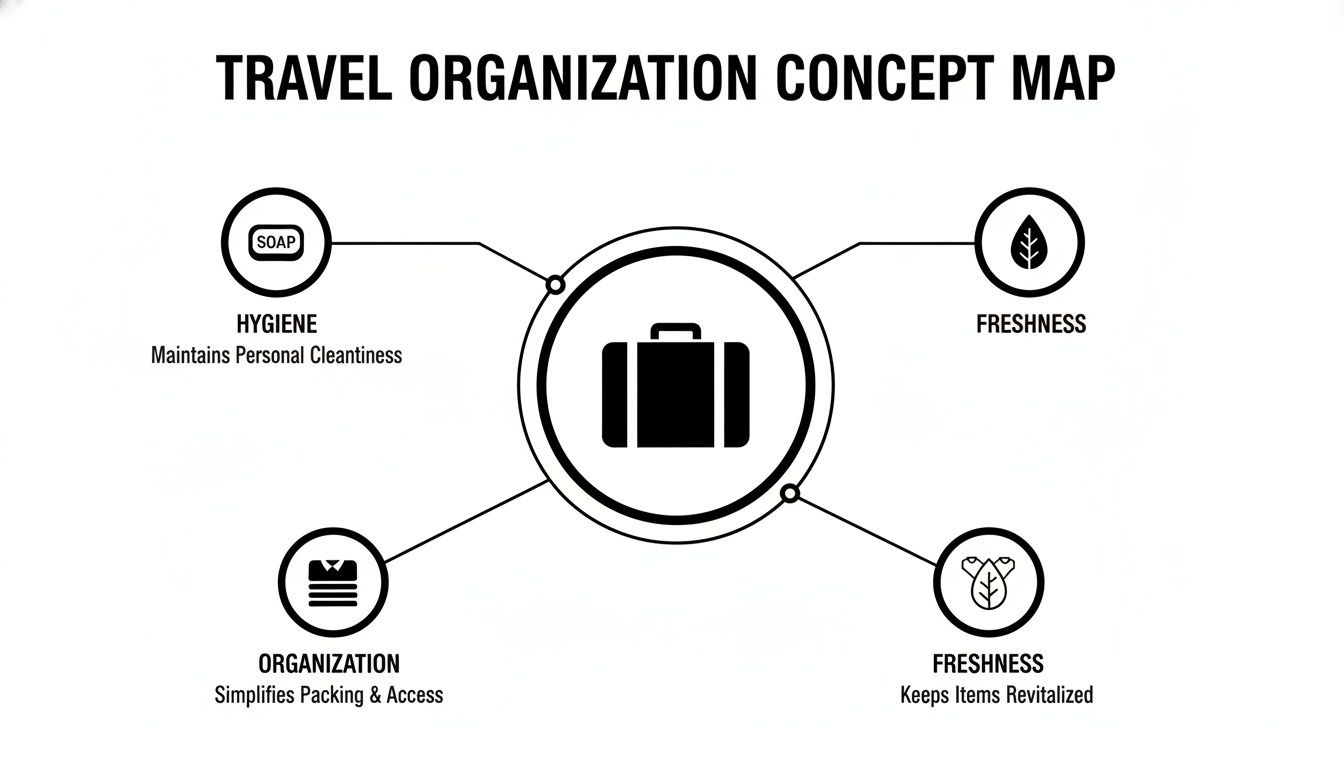
As you can see, the right bag is central to keeping your entire suitcase system working smoothly. For travelers who need more than just basic separation, there are bags designed specifically to tackle the biggest travel headaches: space and smell.
Compression Sacks: The Carry-On Traveler's Secret Weapon
If you live out of a carry-on or just can't resist packing that one extra outfit, compressible laundry sacks will feel like a magic trick. These are essentially stuff sacks, but with a clever twist: they have external compression straps. Once you've filled the bag, you systematically tighten these straps to force all the excess air out, dramatically shrinking the bag's overall volume.
The first time you use one, the result is pretty amazing. You can take a bulky pile of dirty laundry and shrink it down to a small, dense brick that frees up a shocking amount of space in your luggage.
Of course, there's a trade-off for all that compression. It will introduce serious wrinkles, especially into natural fabrics like cotton and linen. So, while it’s perfect for squishing down socks, t-shirts, and workout clothes, you’ll want to keep your dress shirts far away from it.
High-Tech Odor and Moisture-Resistant Bags
For anyone who packs gym clothes, damp swimwear, or has ever been caught in a downpour on day two of a ten-day trip, these bags are non-negotiable. Sitting at the premium end of the market, these bags are engineered to actively combat smells and dampness. They usually get the job done with two key features:
- Water-Resistant Linings: A thin polyurethane (PU) coating or a similar waterproof barrier lines the inside, creating a wall that stops moisture from escaping and making the rest of your clothes damp.
- Antimicrobial Fabrics: The material itself is often treated or woven with agents that stop odor-causing bacteria from growing in the first place. Think of it as preventative medicine for your suitcase.
This type of dirty clothes bag for travel is a must-have for active travelers and anyone on a long trip where laundry days are few and far between. They cost a bit more, but the peace of mind that comes from a fresh-smelling suitcase is worth every penny.
To help you decide, here’s a quick breakdown of how these different bag types stack up against each other.
Travel Dirty Clothes Bag Comparison
This table compares the most common types of travel laundry bags based on key features relevant to travelers.
| Bag Type | Best For | Pros | Cons |
|---|---|---|---|
| Nylon Drawstring | Short trips, casual vacationers, budget travelers. | Lightweight, breathable, inexpensive, packs down small. | No odor control, doesn't save space, can tear easily. |
| Compression Sack | Carry-on only travelers, backpackers, over-packers. | Massively reduces volume, durable ripstop material. | Causes significant wrinkles, no odor or moisture control. |
| Odor/Moisture-Resistant | Active travelers, long-haul trips, packing damp clothes. | Excellent odor and moisture containment, keeps suitcase fresh. | More expensive, can be less breathable, heavier. |
Ultimately, the best bag for you depends entirely on your travel style. A casual vacationer might be perfectly happy with a simple drawstring, while a business traveler who hits the hotel gym will find an odor-resistant bag to be an essential piece of gear.
We’ve all been there. You pop open your suitcase mid-trip to grab a fresh shirt, only to be hit with a wave of stale, musty air from the dirty laundry you’ve stashed away. It's one of travel's most annoying little problems. That pile of used clothes, especially after a sweaty hike or a day at the beach, can quickly make everything else in your bag smell less-than-fresh. The real culprit? Trapped moisture and bacteria, which kick into overdrive in the dark, confined space of your luggage.
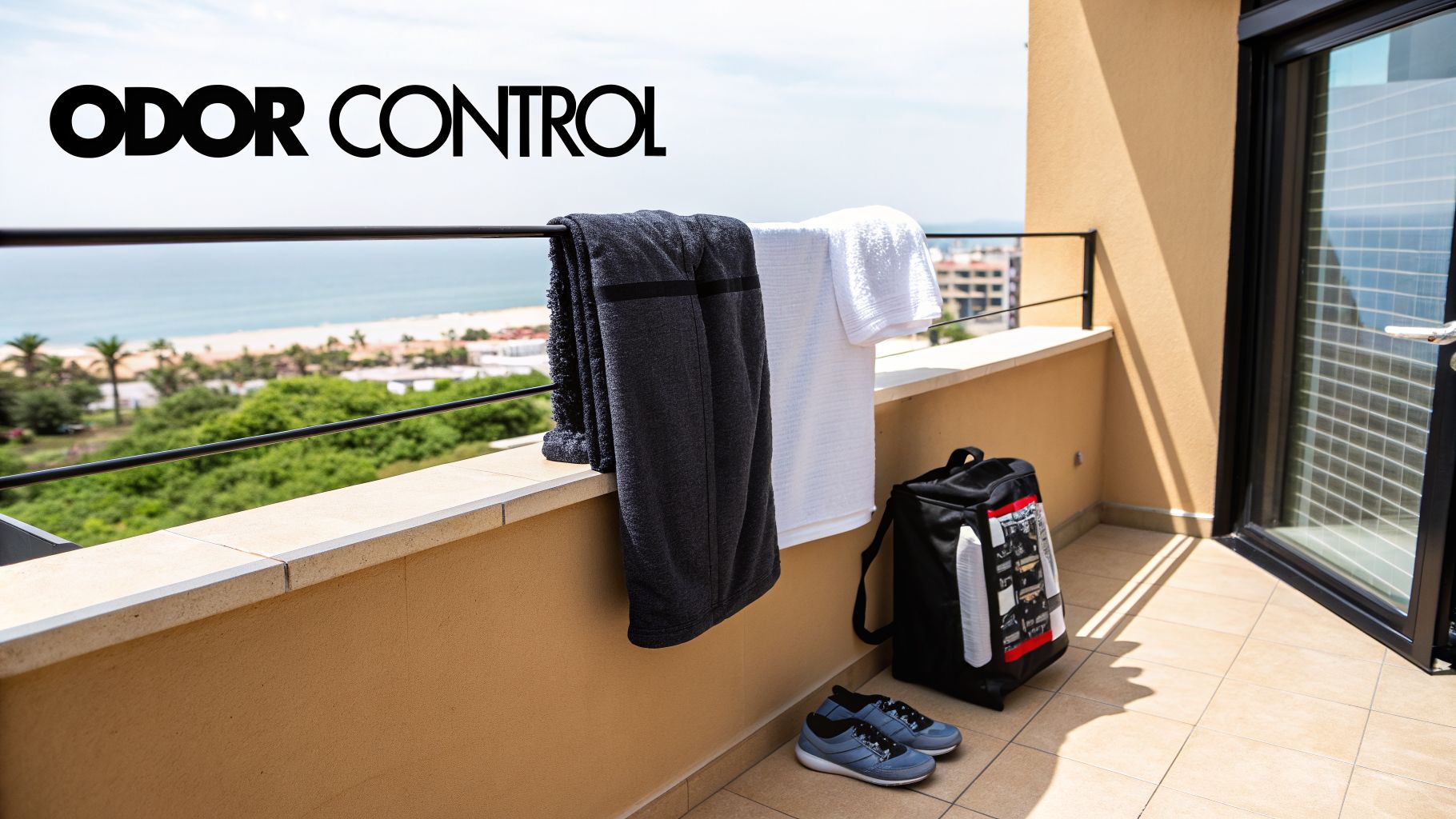
Your first move in keeping things fresh is choosing the right dirty clothes bag for travel. A simple nylon sack might keep dirty and clean clothes separate, but it does next to nothing to stop funky smells or dampness from a swimsuit. To really contain the problem, you need a bag built for the job.
Look for bags made with specialized materials that create a true barrier. Some have a polyurethane (PU) coated interior that effectively traps moisture, protecting your clean gear. Others go a step further, using fabrics infused with antimicrobial agents that actively fight the growth of the bacteria that cause odors in the first place.
Air It Out Before You Pack It Away
Here’s a simple trick that makes a world of difference: let your clothes breathe before you seal them away. It's tempting to just chuck that damp gym shirt or wet swimsuit into the laundry bag and forget about it, but that's a recipe for a musty suitcase.
Instead, take a moment to hang your damp items over a chair, a balcony railing, or even a shower rod for at least an hour. Letting air circulate and evaporate the worst of the moisture is the single best thing you can do to prevent mildew and smells from developing. Even partially dry clothes are far less likely to cause a problem.
This small habit is a cornerstone of good travel hygiene. It buys you time, especially on longer trips where you might go days without doing laundry.
Your dirty clothes bag for travel isn't just a container; it's your first line of defense against odor. The secret to a fresh-smelling suitcase is combining a purpose-built bag with smart habits like this one.
Add-In Odor Absorbers for Extra Protection
Even the best laundry bag can use a little backup. Think of these add-ins as your secret weapon for reinforcing freshness. They work by absorbing any lingering moisture and neutralizing smells before they have a chance to take hold.
Toss a few of these inside your dirty laundry bag for an extra layer of protection:
- Dryer Sheets: A classic for a reason. Tucking one or two into your bag helps mask odors with a clean, pleasant scent. Just swap them out every few days to keep them effective.
- Activated Charcoal Sachets: These little pouches are odor-fighting powerhouses. Activated charcoal is a natural wonder, known for its incredible ability to absorb and trap both moisture and smells. You can even "recharge" most of them by leaving them out in the sun.
- Silica Gel Packets: You know those little packets that come in new shoe boxes or purses? Don't throw them out! They are brilliant at absorbing moisture and are perfect for tossing into your laundry bag to combat dampness.
When you combine a dedicated dirty clothes bag for travel with these simple but powerful tactics, you gain complete control over odor and moisture. It’s how you keep your luggage organized and, most importantly, fresh from the start of your trip to the end.
Smart Packing for Minimalists and Carry-On Only Travelers
If you’re a die-hard minimalist traveler or live by the carry-on-only rule, you know the game is all about maximizing every last inch of your bag. Adding another piece of gear can feel like a step backward, but trust me on this: a good dirty clothes bag for travel isn't just another item. It's the secret weapon for keeping your bag organized and your clothes fresh.
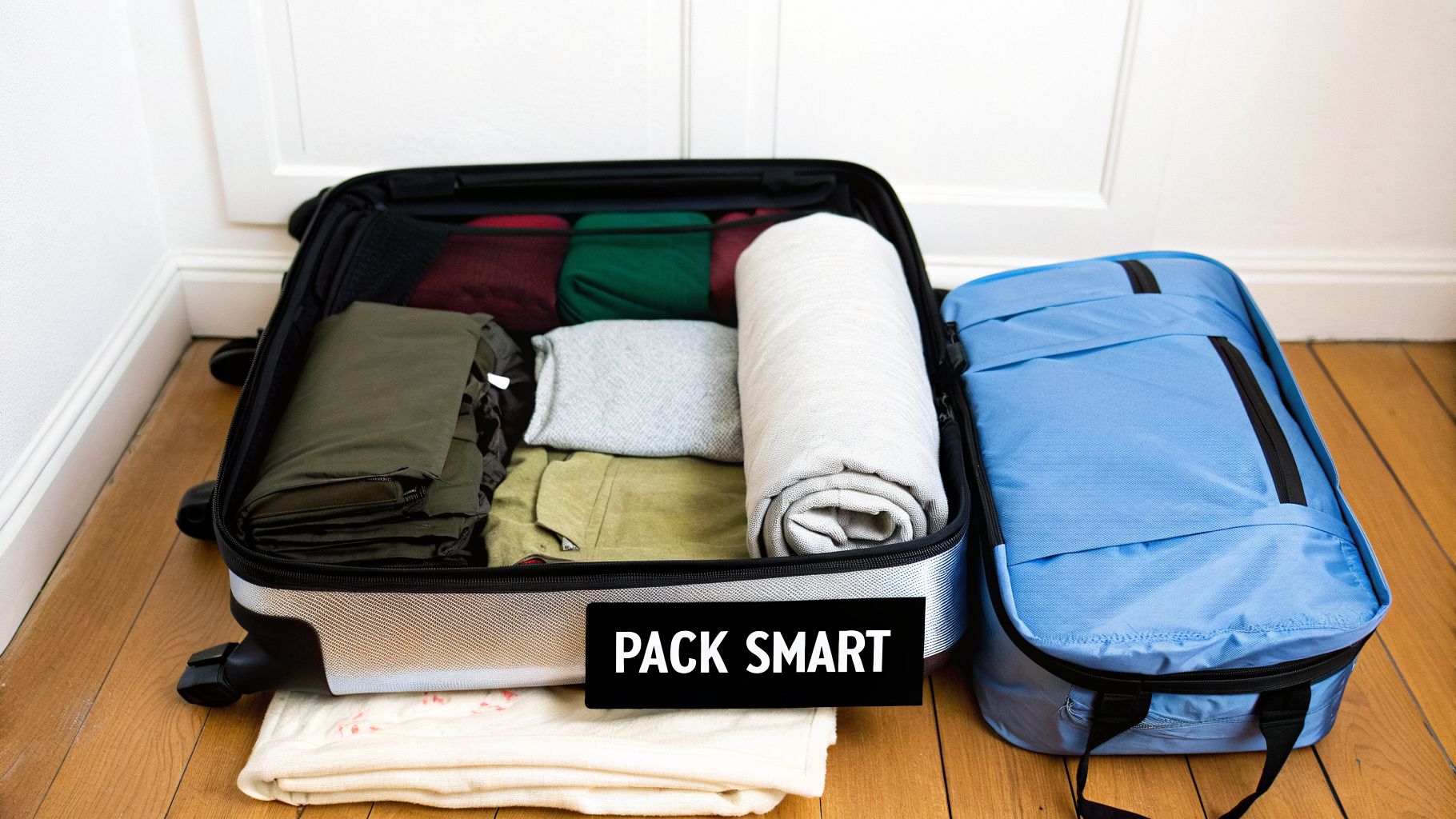
Think about how a trip progresses. You start with a suitcase full of clean clothes and end with... well, a mess, if you're not careful. Your laundry bag is what manages that shift. It’s a dynamic tool that prevents the clean and dirty from mixing, stopping that dreaded end-of-trip chaos where you can't tell what's what.
The Compression Strategy
For anyone trying to squeeze a week's worth of gear into a carry-on, compressible laundry sacks are a revelation. These aren't your average cloth bags; they have external straps that let you literally crush the air out of your worn clothes, turning a messy pile into a compact, manageable block. The space this saves is often enough for that extra souvenir or just the relief of zipping your bag shut without a fight.
To get the most out of it, pack smart. Roll your softer clothes—t-shirts, underwear, socks—as tightly as you can before stuffing them in. This creates a solid base for compression. For stiffer things like jeans, a flat fold on top works best before you pull those straps tight.
By the end of your trip, a huge chunk of what's in your suitcase will be neatly compressed into one small package. This keeps everything contained and unlocks a surprising amount of free space.
The Multifunctional Approach
Travel gear companies are finally catching on. The market for travel laundry bags is expected to climb to USD 2.4 billion by 2033, and it’s because travelers are demanding smarter ways to stay organized on the road. We're even seeing high-end suitcases with laundry bags built right in, a clear sign that separating dirty clothes is now a core part of good packing design.
This all feeds into a central idea of minimalist travel: every item you carry should work hard, ideally pulling double or triple duty. A dirty clothes bag isn't just for dirty clothes. It's also:
- A portable hamper: It keeps worn, smelly clothes off your hotel room floor and away from your clean stuff.
- A space-saver: If it's a compression model, it actively creates more room in your luggage.
- An unpacking shortcut: When you get home, you just grab the whole bag and dump it straight into the washing machine.
Once you stop seeing it as just a bag and start thinking of it as an active organizing tool, it becomes essential. It’s a simple piece of gear that brings some much-needed order to the tight confines of a carry-on. For more tips on making the most of your space, check out our guide on how to pack carry-on only.
How to Choose Your Perfect Travel Laundry Companion
Picking the right dirty clothes bag for travel is a lot like choosing any other piece of critical gear—it needs to work for you and not cause any headaches on the road. We’ve all been there, stuffing sweaty clothes into a flimsy hotel plastic bag, hoping it doesn't split open. Moving past that is the first step, and the real secret is matching a bag’s features to the kind of trips you actually take.
It’s a small investment that pays you back every single time you pack up to leave a hotel room. And it’s clear other travelers feel the same. The global travel bag market, which was valued at around USD 20.48 billion in 2024, is expected to jump to USD 26.73 billion by 2026. That boom isn't just about suitcases; it's about people demanding smarter, purpose-built gear that solves real travel problems, like keeping dirty laundry properly contained.
Material Durability and Weight
The fabric of your laundry bag is everything. It determines how tough it is, how much it weighs, and how well it actually does its job. You're looking for that sweet spot: something durable enough to get shoved into a packed bag but light enough that you forget it's even there.
- Ripstop Nylon: This is my go-to and a fantastic all-around choice. It’s unbelievably lightweight and woven with a grid pattern that stops small tears from turning into giant rips.
- Polyester: Another solid, budget-friendly option. It’s plenty durable and resists scuffs and scrapes, but it can feel a tad heavier than a high-quality nylon bag.
- Canvas/Cotton: While these look rugged, they’re heavy and tend to soak up moisture and smells. That makes them a poor choice for stashing damp gym gear or a wet swimsuit.
For the vast majority of us, a lightweight ripstop nylon bag is the perfect blend of strength and packability. It does its job without ever becoming a burden.
Size, Capacity, and Closure
Next up, be realistic about how much laundry you’ll actually have. A bag that’s too small is obviously useless, but one that’s too big is just eating up valuable space in your carry-on. A 15-liter bag is usually perfect for a weekend trip, while a 25-liter bag works well for a week-long journey. On longer trips, I sometimes bring two smaller bags to sort lights and darks from the get-go.
Don't overlook the closure mechanism, either. It’s what separates the good bags from the great ones.
A secure closure is what stands between your dirty socks and your clean dress shirt. A simple drawstring is fine for dry clothes, but a zipper or roll-top closure provides superior containment for odors and dampness.
A roll-top closure, which is borrowed from the dry bags kayakers and paddleboarders use, is especially brilliant. By rolling it down and clipping it shut, you create a nearly airtight seal. This makes it the absolute best choice if you know you’ll be packing damp towels or workout clothes. These are also often found on bags built for compression, and if you’re serious about saving space, you might also want to look into using a vacuum bag for clothes travel as a powerful combo.
Laundry Logistics and Bag Care on the Road
Even the best dirty clothes bag for travel has its limits. On any trip longer than a few days, you'll need a plan for doing laundry. This keeps your bag from overflowing and, just as importantly, keeps your clean clothes from fraternizing with the enemy.
You’ve got a few solid options for washing clothes on the go. Hotel laundry services are the most convenient, but that convenience comes with a hefty price tag. For a more budget-friendly approach, find a local laundromat—it’s often a great way to get a feel for the neighborhood.
If you just need to refresh a few key items, like socks or a favorite shirt, hand-washing in the sink with a bit of travel detergent is your quickest solution. It's a lifesaver for minimalist packers.
Bag Maintenance and Cleaning
Of course, it's not just your clothes that need a good cleaning. Your laundry bag is doing the dirty work, and it needs a refresh every now and then to keep mildew and funky smells from settling in for good. How you clean it really just comes down to the material.
- Machine Washable Bags: Most simple nylon or polyester bags are a breeze to clean. Just turn them inside out and toss them in the wash on a gentle cycle.
- Wipe-Down Bags: If your bag has a special waterproof lining or coating, skip the machine. A quick wipe-down with a damp cloth and some mild soap is all it takes.
No matter how you wash it, the single most important step is to let your bag dry completely before you pack it away. Sealing in even a tiny bit of moisture is a surefire way to get a musty, mildewed smell next time you open it.
The Growing World of Laundry Services
The good news is that finding a place to do laundry while traveling is getting easier all the time. While North America has historically been the biggest market for travel gear, the Asia Pacific region is catching up fast, with the portable wash bag market projected to grow at a 9.0% CAGR through 2030.
This boom is partly thanks to the rise of accessible laundry services, which makes extended trips far less of a hassle. We're seeing more strategic partnerships, like the one between Laundryanna and Quickr.com in India, designed to make life simpler for travelers. You can dig deeper into these market trends and their impact on travel to see where things are headed.
Taking proper care of your gear ensures it will be with you for many trips to come. And since you're clearly someone who values well-maintained equipment, you might also find our guide on how to properly wash a goose down jacket helpful for your more technical apparel.
Frequently Asked Questions About Travel Laundry Bags
Even with the best packing strategy, a few practical questions always seem to pop up. Let's clear the air on some of the most common ones I hear about that unsung hero of travel gear: the dirty clothes bag for travel.
How Big of a Laundry Bag Do I Need?
This is a classic Goldilocks problem—you need a size that's just right. Go too small, and it's useless after a few days. Go too big, and you're sacrificing valuable space in your carry-on.
The key is to match the bag’s capacity to your trip’s duration. Here’s a simple rule of thumb I follow:
- Weekend Trip (2-3 days): A small 10-15 liter bag is usually all you need.
- Week-Long Trip (5-7 days): Step up to a 20-25 liter bag. This should comfortably hold a week's worth of socks, shirts, and everything in between.
- Extended Travel (8+ days): You have two smart options here. Either pack a single large 30+ liter bag that you can empty on laundry day, or bring two smaller bags to pre-sort your lights and darks as you go.
Are Odor-Proof Bags Really Effective?
They absolutely are, and for anyone who’s ever unpacked a bag that smells like a locker room, they're a game-changer. These aren't just regular bags; they’re specifically engineered with things like activated carbon liners or antimicrobial fabrics.
These features actively trap and neutralize the smells from damp gym clothes or socks that have seen one too many miles. They genuinely work.
Bottom line: Yes. While they might cost a bit more upfront, the peace of mind you get from creating a foolproof barrier between your dirty laundry and clean clothes is worth every penny.
Can I Just Use a Regular Plastic Bag?
In a real pinch, sure. We've all been there. But as a long-term strategy for any frequent traveler, it's a terrible idea.
Plastic grocery bags are notorious for trapping moisture, which can turn a slightly funky smell into a full-blown mildew situation. They also rip easily and create unnecessary waste. A purpose-built, reusable dirty clothes bag for travel is a far more reliable, durable, and sustainable choice.
For a jacket that’s as smart and packable as your travel accessories, check out the STR-8 Jacket. Its built-in support system turns travel time into rest time, and its lightweight design makes it the perfect companion for any minimalist traveler. Learn more at https://www.str-8jacket.com.